


Unlock the benefits of Compression therapy
Improve circulation, reduce muscle soreness, and support faster recovery through targeted compression. A relaxing, non-invasive therapy designed to help your body recover more efficiently and feel its best.
The Benefits Of Compression Therapy
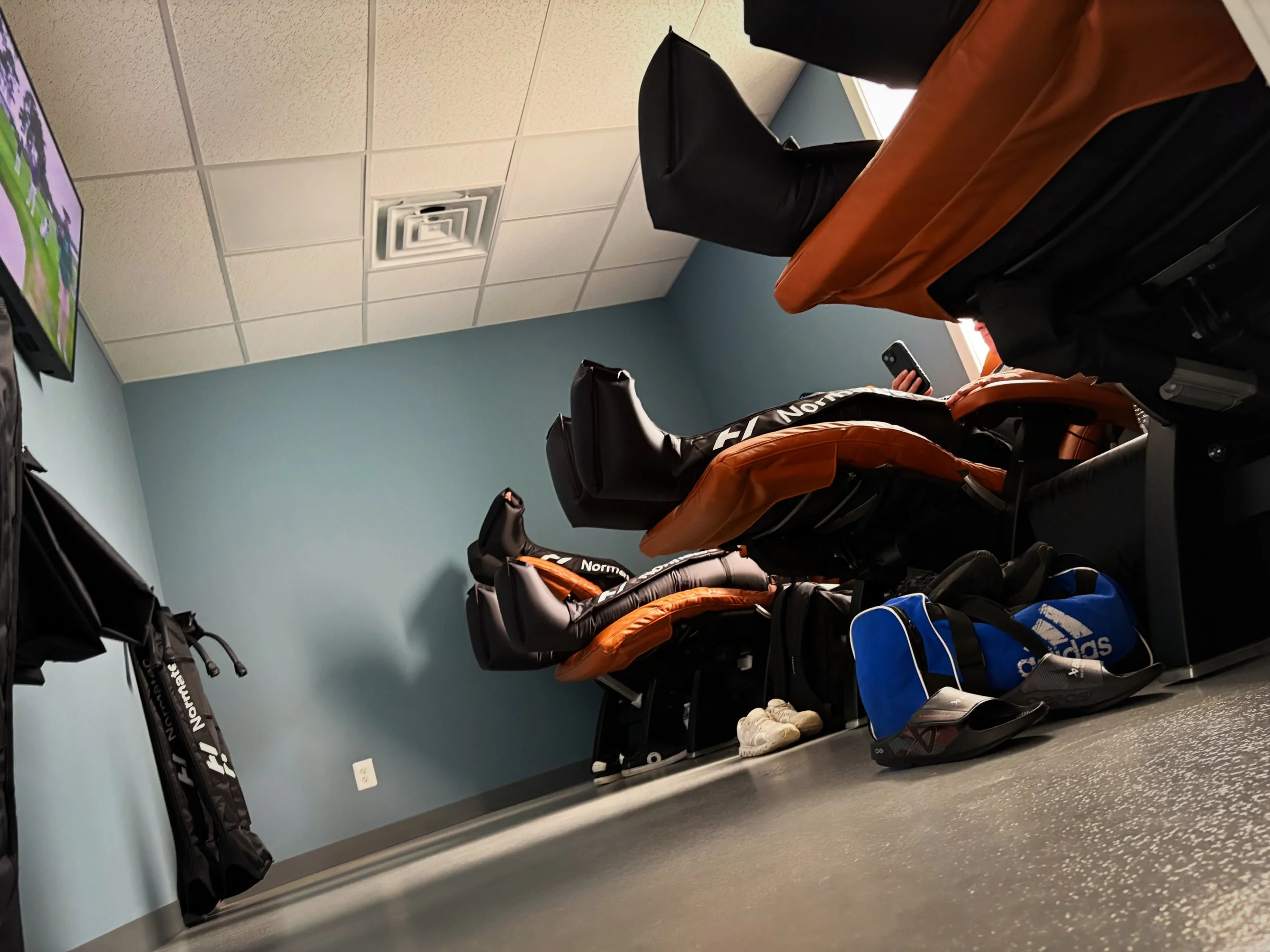
Improve Circulation & blood flow
Targeted compression helps move blood through the limbs more efficiently, delivering oxygen and nutrients to support recovery.
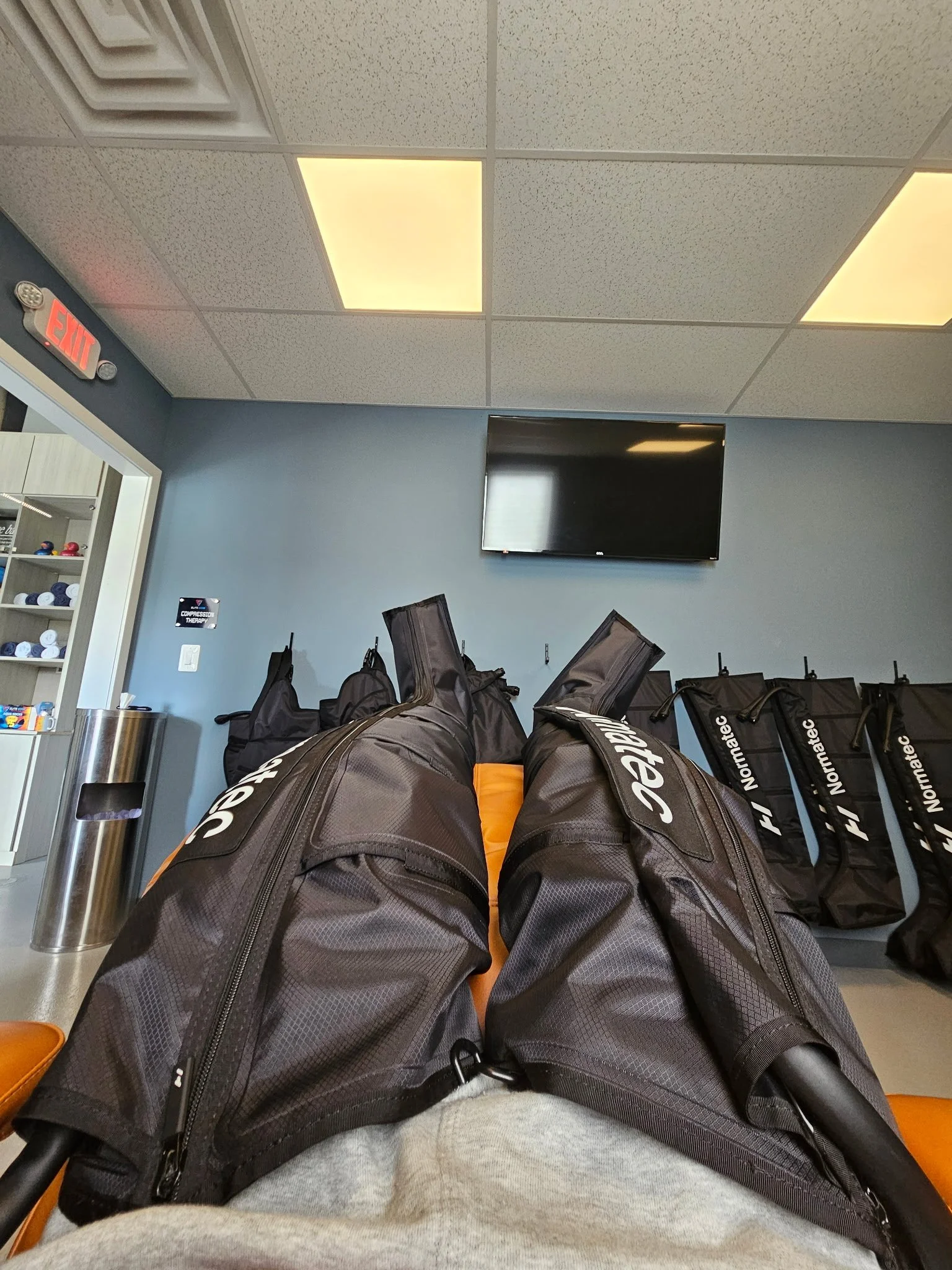
REduce muscle soreness & fatigue
Rhythmic pressure helps flush out metabolic waste, easing soreness and helping muscle recover faster after activity.
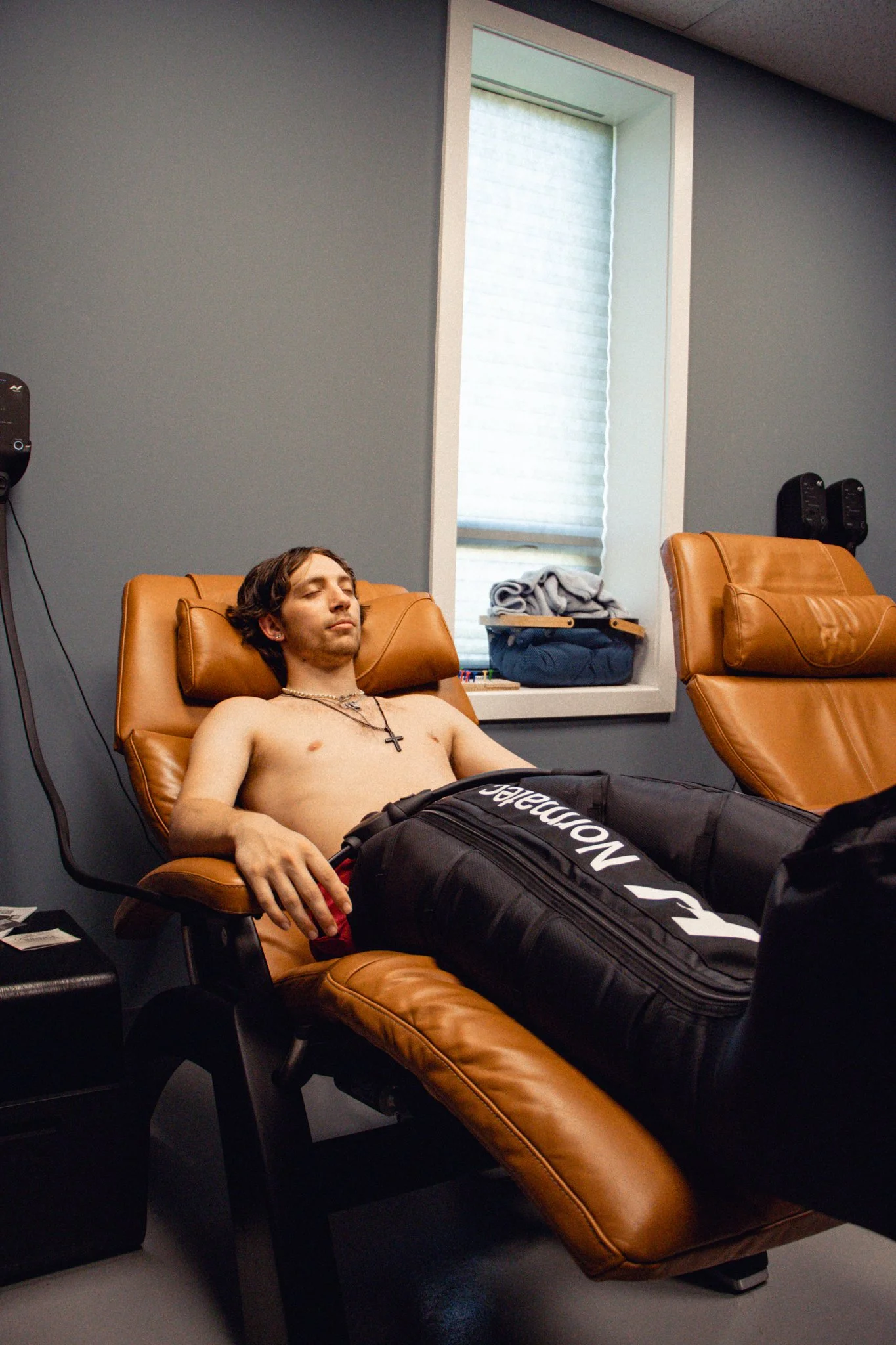
spEed up recovery & Performance
Regular use supports quicker recovery between sessions, helping you stay consistent, perform better, and feel ready for your next workout.
The Science
✳︎
The Science ✳︎

How Long Should You Use Compression Therapy?
“Research examining intermittent pneumatic compression suggests that 20–30 minute sessions are among the most commonly studied protocols for post-exercise recovery.”
A 2024 systematic review and meta-analysis examined 17 studies involving 319 participants and evaluated intermittent pneumatic compression for sports recovery. The researchers found small or trivial effects on muscular function, while effects on pain and soreness ranged from trivial to moderate. Across the studies reviewed, 20–30 minute sessions and pressures around 80 mmHg were among the most commonly used protocols. (pubmed.ncbi.nlm.nih.gov)
What this means: There's no universally proven “perfect” compression setting, but research commonly examines sessions in the 20–30 minute range. Your individual needs, comfort, training load, and the device's available settings can all influence the appropriate protocol.
Read the research:
Soreness and recovery
“Compression therapy may help you feel less sore after intense exercise, even when measurable improvements in strength or performance aren't always observed.”
A 2025 randomized, placebo-controlled trial examined a 30-minute intermittent pneumatic compression session following exercise designed to produce muscle damage. Researchers found no significant improvement in measures of jumping or maximal muscle contraction compared with placebo. However, the compression group showed a consistent trend toward lower perceived muscle soreness during recovery. (pubmed.ncbi.nlm.nih.gov)
What this means: The potential benefit of compression may not always show up as an immediate increase in strength or performance. For some people, its value may be in reducing the perception of soreness and helping them feel more recovered.
Read the research:
Compression Therapy & Recovery in Trained Athletes
“Recent research suggests intermittent pneumatic compression may improve some short-term recovery measures in trained athletes, even when it doesn't necessarily translate into better performance.”
A 2026 randomized, sham-controlled crossover trial examined 21 high-level road cyclists following a strenuous cycling time trial. After a 30-minute intermittent pneumatic compression treatment, researchers found improvements in perceived recovery, muscle soreness, fatigue, and certain neuromuscular measures compared with the sham condition. However, those improvements did not translate into significantly better cycling performance 24 hours later. (pubmed.ncbi.nlm.nih.gov)
What this means: Compression therapy may help athletes feel and function more recovered in the short term, but feeling more recovered doesn't necessarily mean you'll automatically perform better in your next workout or competition.
Read the research:
If you're interested in compression therapy, complete the form with a few details. We'll get back to you as soon as possible.